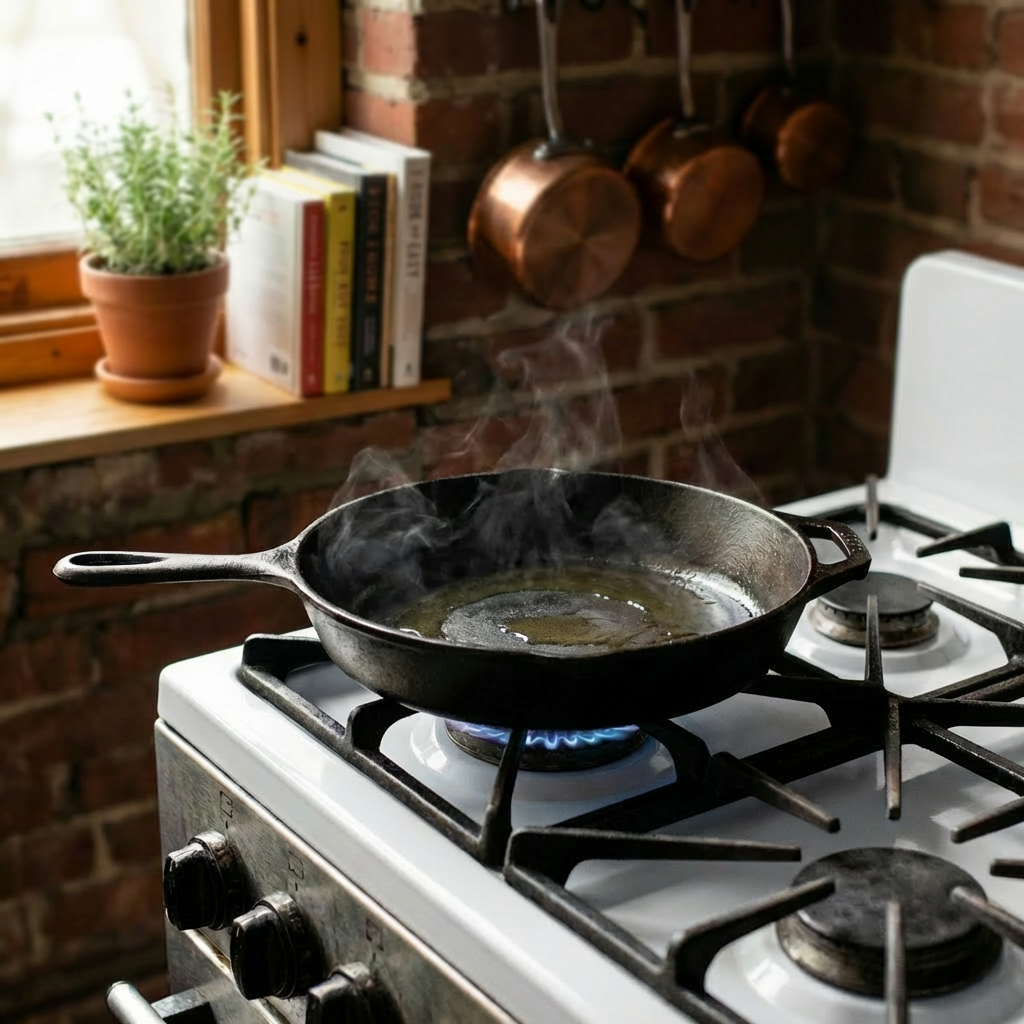
If you’ve ever used a cast iron skillet, carbon steel pan, or even certain types of grill grates, you’ve likely heard the term “seasoning.” At first glance, it sounds like it has something to do with flavor—salt, spices, herbs—but in this context, seasoning refers to something entirely different. It’s a process that transforms bare metal into a naturally nonstick, rust-resistant cooking surface. At the heart of this transformation lies a fascinating bit of chemistry: polymerization.
Understanding seasoning isn’t just useful for maintaining cookware—it also reveals a compelling intersection of chemistry, materials science, and culinary tradition. Let’s break it down step by step.
What Is Seasoning?
Seasoning is the process of applying a thin layer of oil to a metal surface and heating it until it undergoes a chemical transformation. The result is a hard, dark coating that bonds to the metal. This coating improves with repeated use, becoming smoother and more effective over time.
Contrary to popular belief, seasoning is not simply baked-on grease. If it were, your pan would be sticky, rancid, and unpleasant to cook with. Instead, a properly seasoned surface is dry, smooth, and durable. That transformation—from liquid oil to solid coating—is where polymerization comes in.
The Role of Oils: More Than Just Fat
Not all oils behave the same way when heated. The best oils for seasoning—such as flaxseed oil, grapeseed oil, or canola oil—contain a high proportion of unsaturated fats. These fats have double bonds in their molecular structure, which makes them chemically reactive under heat.
When you spread a very thin layer of oil across a pan and heat it past its smoke point, several things begin to happen:
- The oil starts to break down.
- Volatile compounds evaporate (this is the smoke you see).
- The remaining molecules begin to react with oxygen and with each other.
This is where the science gets interesting.
What Is Polymerization?
Polymerization is a chemical process in which small molecules, called monomers, link together to form long chains or networks known as polymers. These polymers often have very different properties from the original substances.
In the case of seasoning, the unsaturated fat molecules in oil act as the building blocks. When exposed to high heat and oxygen, they undergo a process called oxidative polymerization.
Here’s how it works:
- Heat breaks some of the molecular bonds in the oil.
- Oxygen from the air reacts with the exposed sites on the molecules.
- The molecules begin linking together, forming a cross-linked network.
This network hardens into a plastic-like coating that adheres tightly to the metal surface.

From Liquid Oil to Solid Coating
The transformation during seasoning is dramatic. You start with a slippery liquid and end up with a tough, almost varnish-like layer. This happens in several stages:
1. Application
A very thin layer of oil is spread over the cookware. Thickness matters—too much oil will result in uneven, sticky patches instead of a smooth coating.
2. Heating
The pan is heated to a high temperature, typically above the oil’s smoke point. This initiates the breakdown of the oil and drives off impurities.
3. Oxidation
Oxygen reacts with the oil molecules, creating reactive sites that allow them to bond with one another.
4. Polymerization
The molecules link together into a three-dimensional network, forming a solid film.
5. Bonding to Metal
The polymerized oil adheres to microscopic irregularities on the metal surface, effectively anchoring itself in place.
Why Seasoning Works
The polymerized layer created during seasoning has several useful properties:
1. Nonstick Behavior
The smooth, hardened surface reduces friction, making it easier for food to release. While it’s not as slick as synthetic nonstick coatings, it improves significantly with repeated seasoning.
2. Corrosion Resistance
Bare iron reacts readily with moisture and oxygen, leading to rust. The seasoned layer acts as a barrier, protecting the metal underneath.
3. Thermal Stability
Unlike raw oil, which can burn or degrade quickly, the polymerized coating is more stable at high temperatures.
4. Self-Reinforcing Nature
Each time you cook with oil, especially at higher temperatures, you add microscopic layers to the existing seasoning. Over time, this builds a stronger, more resilient surface.
Why Thin Layers Matter
One of the most common mistakes in seasoning is applying too much oil. It might seem intuitive that more oil would create a better coating, but the opposite is true.
Thick layers of oil:
- Don’t fully polymerize
- Trap unreacted material
- Become sticky or gummy
Thin layers, on the other hand:
- Heat more evenly
- Allow oxygen to interact with more molecules
- Form a uniform, hard coating
This is why many experts recommend wiping the pan until it looks almost dry before heating—it ensures only a microscopic layer remains.
The Importance of Temperature
Temperature plays a critical role in polymerization. If the pan isn’t hot enough, the oil won’t fully break down and polymerize. If it’s too hot, the coating can burn unevenly or become brittle.
Each oil has a “smoke point,” the temperature at which it begins to visibly smoke. Seasoning typically requires heating slightly above this point to trigger the necessary reactions.
Oils with higher smoke points tend to be more forgiving, while those with lower smoke points can polymerize more quickly but may require more careful control. Start on low heat and wait for the pan to produce a small amount of smoke.
Repetition Builds Strength
A single round of seasoning creates only a thin base layer. To develop a durable, high-performance surface, multiple layers are needed.
Each cycle of oiling and heating adds:
- Additional polymerized material
- Greater uniformity
- Increased resistance to wear
Over time, the surface darkens, often becoming deep brown or black. This coloration is a visual indicator of accumulated polymer layers and carbonized material.
Seasoning vs. Burning
It’s important to distinguish between proper seasoning and simply burning oil onto a surface.
Proper seasoning:
- Results in a smooth, dry finish
- Is chemically bonded to the metal
- Improves with use
Burnt oil residue:
- Is sticky or flaky
- Sits on top of the surface rather than bonding
- Can impart off flavors
The difference lies in achieving complete polymerization rather than partial degradation.
Maintenance and Longevity
Once a pan is seasoned, maintaining it is relatively simple:
- Avoid prolonged exposure to water
- Dry thoroughly after washing
- Apply a light coat of oil after use
- Heat occasionally to reinforce the coating
Over time, even well-seasoned surfaces can wear down, especially with acidic foods or aggressive scrubbing. Fortunately, seasoning is renewable—you can always reapply layers and restore the surface.
A Natural Alternative to Synthetic Coatings
One of the reasons seasoning has remained popular for centuries is that it offers a natural alternative to manufactured nonstick coatings (such as Teflon pans). Instead of relying on synthetic materials, it uses basic ingredients—oil, heat, and time—to create a functional surface.
While it requires more care and understanding, many cooks appreciate the durability, versatility, and chemical simplicity of a well-seasoned pan.
Conclusion
Seasoning is far more than a culinary ritual—it’s a controlled chemical process that transforms oil into a durable, protective coating through polymerization. By understanding the science behind it, you can approach cookware care with greater precision and confidence.
The key principles are simple: use thin layers, apply sufficient heat, and repeat the process over time. With patience, you’ll build a resilient surface that enhances both cooking performance and longevity.
In the end, seasoning is where chemistry meets craftsmanship—a blend of science and practice that rewards those who take the time to understand it.
Leave a Reply